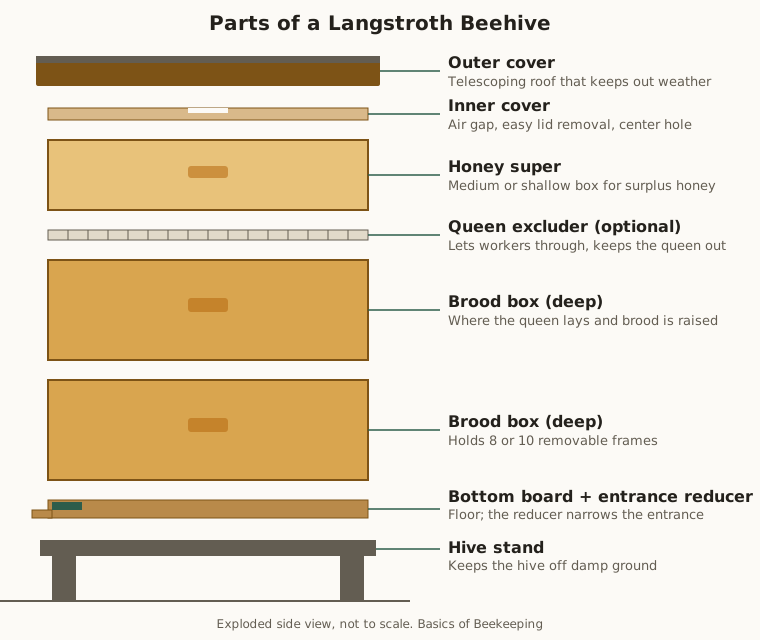
A beehive kit can look like a pile of confusingly named boxes and boards. Each part has a specific job, though, and once you know what it does, the whole hive makes sense. This guide walks through every part of a Langstroth hive (the standard US hive) from top to bottom. For each part it covers what it does, whether you really need it, and one tip for beginners.
The details come mainly from Arkansas and Texas A&M extension materials. For box and frame measurements, see our Langstroth hive explained guide.
Parts of a beehive at a glance
| Part | What it does | Essential? |
|---|---|---|
| Outer cover | Keeps rain, sun, and wind out | Yes |
| Inner cover | Creates an air gap, makes the lid easy to remove | Yes, according to Texas A&M |
| Honey super | Holds surplus honey for harvest | Yes, once the colony is strong |
| Queen excluder | Keeps the queen out of honey supers | Optional, debated |
| Brood box | Home of the queen, brood, and the colony’s own food | Yes |
| Frames and foundation | Hold the comb so it can be removed and inspected | Yes, and legally required in many states |
| Bottom board | Floor and entrance | Yes |
| Entrance reducer | Narrows the entrance for small or weak colonies | Strongly recommended |
| Hive stand | Raises the hive off damp ground | Strongly recommended |
Parts of a beehive, top to bottom
Outer (telescoping) cover
The outer cover is the roof. A telescoping cover overhangs the box on all sides, giving more protection from rain. Texas A&M also describes migratory covers, flat one-piece lids that sit flush so commercial beekeepers can pack hives tightly together for transport. Many covers are wood topped with metal sheeting, and plastic and foam versions exist too.
Beginner tip: Arkansas Extension recommends putting a brick or heavy stone on top if your hive is in an exposed, windy spot. A strong wind can flip a lid off. Don’t set a hot smoker on a plastic or foam cover.
Inner cover
The inner cover is a flat board that sits directly on the top box, under the outer cover. It usually has an oval hole in the center and often a notch on one edge that serves as an upper vent or entrance.
Texas A&M calls the inner cover essential. Without it, bees glue the outer cover down with propolis, which makes it very hard to open. Arkansas Extension adds that it creates an insulating air space and helps keep condensation from dripping onto the bees in winter, which our guide to wintering bees explains is a major cause of winter losses. Some beekeepers skip inner covers, especially with migratory lids, but most beginners should use one.
Beginner tip: most inner covers have a right side up. Upside down, the gap above the frames is bigger than bee space, and the bees fill it with burr comb.
Honey supers
Supers are boxes placed above the brood boxes, where the bees store surplus honey for you to harvest. Texas A&M notes that any box placed on top of the brood boxes is called a super, whatever its size. Most beekeepers use medium or shallow boxes as honey supers, because full deeps are too heavy to lift. Mississippi State Extension puts a full medium at about 50 pounds and a full shallow at about 40.
Beginner tip: add supers when the brood boxes are nearly full and a nectar flow is on, not before. A new colony may not need one in its first year.
Queen excluder
A queen excluder is a flat metal or plastic grid placed between the brood boxes and the honey supers. The gaps are big enough for worker bees but too small for the larger queen, so she can’t lay eggs in your honey supers.
It’s one of the most debated parts of the hive. Arkansas Extension notes that many beekeepers call excluders “honey excluders,” believing they discourage workers from storing honey above them. It also notes that during a strong honey flow, the bees usually go through anyway. Its practical tip: once a super is full of nectar, the queen rarely moves up into it, so the excluder can often be removed.
Verdict: optional. Many beginners use one in their first harvest season for clean honey frames, while many experienced beekeepers don’t.
Brood boxes (hive bodies)
Brood boxes, also called hive bodies, sit at the bottom of the stack. This is where the queen lays eggs, the young bees (brood) develop, and the colony stores the honey and pollen it needs to live on. Arkansas Extension explains that hives are arranged to copy a wild nest, with brood below and honey stored above.
Most beekeepers use deep boxes for brood. Texas A&M notes that deeps give the queen the most room to lay. Mississippi State describes two deeps as the traditional brood setup. Other common setups use one deep plus a medium, or all mediums. See Langstroth configurations for the pros and cons.
Beginner tip: a new colony starts in one brood box. Add the second when the bees have drawn comb on most of the frames in the first.
Bottom board
The bottom board is the floor of the hive. Arkansas Extension describes it as a board with rails on three sides. The open front side is the entrance, and the short “front porch” is the landing board.
Bottom boards come in two types:
- Solid bottom boards are simple and warm.
- Screened bottom boards have a mesh floor. Texas A&M notes they improve airflow in hot months and help with pest control, because some varroa mites fall through and can’t climb back. Arkansas Extension adds that a tray underneath can be filled with oil to trap small hive beetles. Most screened boards come with an insert you slide in to close the bottom in cold months.
Beginner tip: a screened bottom board only removes a small share of the mites. It’s not a substitute for testing and treatment.
Entrance reducer
An entrance reducer is a strip of wood with notches of different sizes that fits into the hive entrance. Texas A&M says reducers are important for young or weak colonies, because they shrink the space the bees have to guard against robbers. As the colony grows and the weather heats up, turn it to a larger opening or remove it.
Beginner tip: Texas A&M advises placing the open notch facing down, so water can drain out and dead bees are easy to carry out.
Hive stand
A hive stand raises the hive off the ground. Arkansas Extension notes this keeps the wood away from moisture, rot, and termites, keeps weeds from blocking the entrance, and puts the hive at a more comfortable working height. A stand can be bought or built, and a couple of concrete blocks work well.
Beginner tip: build it sturdy. Arkansas Extension notes a stand may need to hold several hundred pounds per hive in a good season. Don’t build the hive boxes themselves from treated lumber, since it contains insecticide. A stand made from treated wood is fine, because the bees rarely touch it.
Beehive frames and foundation
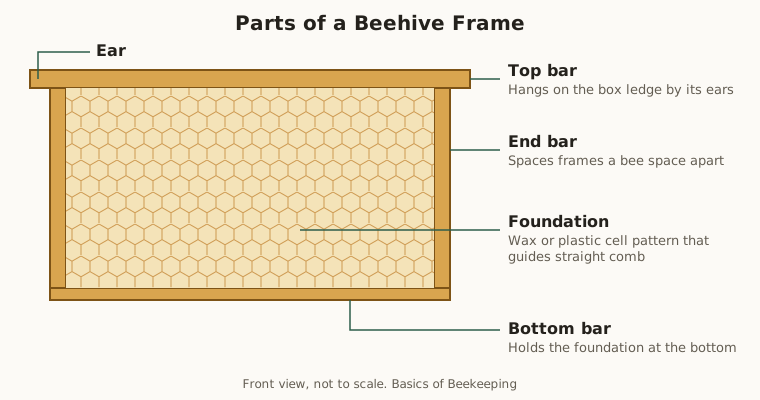
Frames are the heart of a modern hive. Each frame hangs from a ledge inside the box by the ears of its top bar, with bee space around it, so you can lift it out without tearing comb. Arkansas Extension notes it’s now against the law in many states to keep bees in hives without removable combs, because inspectors need to check individual combs for disease.
A frame has four parts:
- Top bar, which rests on the box ledge by its “ears”
- Two end bars, shaped to keep neighboring frames a bee space apart
- Bottom bar
- Foundation, the sheet in the middle
Frames come in deep, medium, and shallow sizes. Always match the frame to the box. Texas A&M warns that a medium frame in a deep box leaves a gap that bees fill with burr comb.
Wax vs plastic foundation
Foundation is a thin sheet embossed with a hexagon cell pattern. Arkansas Extension explains that it helps bees build straight, even comb.
- Beeswax foundation is natural, and bees accept it readily. It’s fragile, and it needs wires or support pins to keep it from sagging, especially in warm conditions.
- Plastic foundation is durable and snaps into grooved frames. Texas A&M notes it can be cleaned, re-waxed, and reused if it isn’t damaged. The downside: Arkansas Extension notes bees may be reluctant to draw comb on bare plastic unless a strong nectar flow is on. A wax coating, or a light spray of 1:1 sugar syrup, helps.
For comb honey, you need thin, wireless beeswax foundation, since you’ll cut and eat the comb.
Foundationless frames
Some beekeepers skip foundation and give the bees just a comb guide, a wooden strip or beveled ridge on the top bar rubbed with wax. The bees follow it and build their own comb downward. It’s cheaper and more natural, but comb can come out crooked, so you’ll need to check and straighten new frames early. Arkansas Extension notes that frames left completely empty, with no foundation or guide, are effectively useless: the bees build comb wherever they like, and you can’t remove the frames without destroying it.
What are drawn frames?
A drawn frame (or drawn comb) is a frame where the bees have already built out the wax cells on the foundation. Drawn comb is valuable: bees need a lot of nectar and energy to make wax, so a colony given drawn frames can start storing honey or raising brood right away. That’s why beekeepers protect and reuse drawn comb from year to year, and why a dead-out with clean comb is still useful.
Beehive box sizes
| Box | Depth | Typical use |
|---|---|---|
| Deep | 9 5/8 in | Brood |
| Medium | 6 5/8 in | Brood or honey |
| Shallow | 5 11/16 in | Honey |
These are the standard depths from the University of Missouri Extension. All three come in 8-frame and 10-frame widths. Our guide to Langstroth box sizes has the full dimension tables and full-box weights.
Hive ventilation parts
Ventilation matters most in summer heat and winter moisture. The main parts:
- Screened bottom boards, for summer airflow
- The inner cover notch or an upper entrance, which lets warm, moist air escape
- Moisture quilts, boxes of wood shavings above the cluster in cold climates
See our winter preparation guide for how to set these up before cold weather.
Optional add-ons
- Feeder: a top, frame, or entrance feeder for sugar syrup
- Mouse guard: a metal strip for the entrance in fall and winter
- Slatted rack: a frame-depth rack between the bottom board and the brood box that some beekeepers use to give bees more room near the entrance
- Hive tool, smoker, and protective gear: not parts of the hive, but you need them to work it. See our equipment guide for new beekeepers.
How to set up a beehive
- Level the hive stand in a sunny, sheltered spot, with a slight forward tilt so rain drains out the front.
- Place the bottom board on the stand, with the entrance reducer at its smallest opening for a new colony.
- Add one brood box with a full set of frames and foundation.
- Add a feeder for a new package or nuc.
- Put on the inner cover, right side up.
- Put on the outer cover, weighted with a brick if it’s windy.
- Add the second brood box later, when the bees have drawn comb on most frames in the first.
- Add the queen excluder (optional) and honey supers once both brood boxes are full and a nectar flow is on.
Assemble and paint new boxes well before your bees arrive. Arkansas Extension recommends an exterior-grade paint on outside surfaces only, and assembling boxes with the handholds on the outside. Our start-to-finish beginner guide puts these steps on a calendar.
Parts of other hive types
- Top bar hives have a single long box, bars instead of frames, and a movable divider (follower board) instead of stacked boxes. Our top bar hive guide covers them in detail.
- Warré hives stack small boxes with top bars, plus an insulating quilt box on top.
See our side-by-side hive comparison for how they differ.
Common questions
What are the four basic components of a beehive?
The cover (inner and outer), the boxes (brood boxes and honey supers), the frames that hold the comb, and the bottom board. A hive stand, an entrance reducer, and an optional queen excluder complete a standard Langstroth setup.
What is the inner cover for?
It creates an insulating air gap, helps keep condensation from dripping on the bees in winter, and stops bees gluing the outer cover down with propolis, so the hive is much easier to open. Texas A&M calls it essential.
Do I need a queen excluder?
No, it’s optional. It keeps the queen from laying eggs in your honey supers, but some beekeepers feel it slows honey storage. Many beginners use one in their first harvest season. Once a super is full of nectar, the queen rarely moves into it.
What’s the difference between a brood box and a super?
The brood box is the bottom box where the queen lays eggs and the colony lives. A super is any box placed above it, usually to store surplus honey for harvest.
Should I use plastic or wax foundation?
Both work. Plastic is durable and reusable, but bees may be slower to draw comb on it unless it’s wax-coated. Wax is readily accepted but fragile and needs wiring. Use thin wireless wax if you want comb honey.
Sources and further reading
- University of Arkansas Cooperative Extension, Basic Beekeeping 2: The Bee Hives
- University of Arkansas Cooperative Extension, Quick Guide to Beekeeping Woodenware
- Texas A&M AgriLife Extension, ENTO-100: Beekeeping Equipment, Hive Boxes
- Mississippi State University Extension, P3594: Beginning Beekeeping in Mississippi
- University of Missouri Extension, G7600: Beekeeping Tips for Beginners