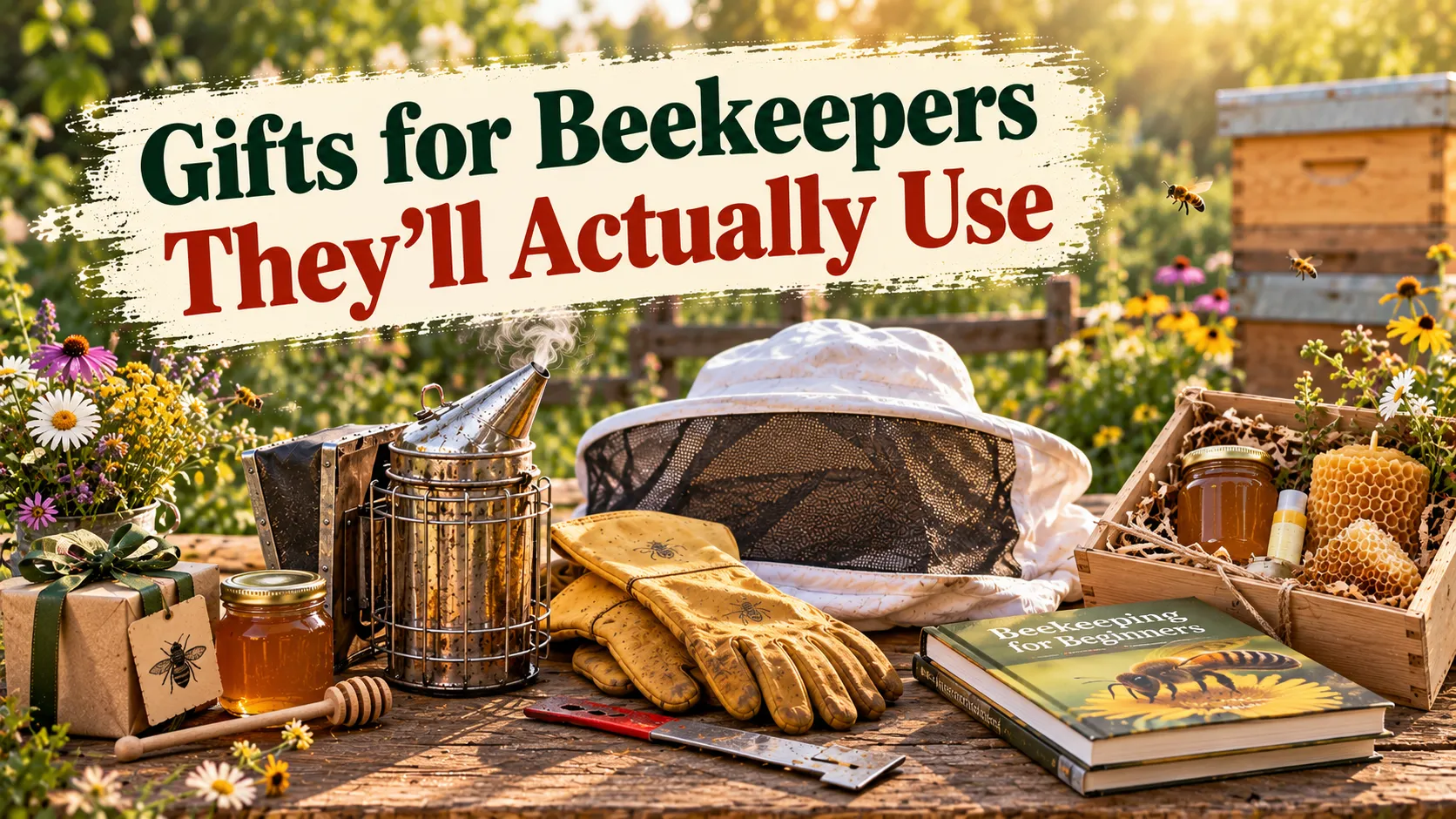
Shopping for a beekeeper is tricky. Most of what they use depends on details you may not know: 8-frame or 10-frame boxes, Langstroth or top bar, medium or large. And if they’ve kept bees for a while, they already own the basics.
This guide sorts gifts by budget, and labels each one as safe to buy (works with any setup) or check first (depends on their hive or size). We haven’t tested these items hands-on. The picks are based on extension equipment lists and recurring patterns in beekeeper feedback. Where no single product stands out, we link to Amazon search results so you can compare current options.
Gifts at a glance
| Gift | Budget | Best for | Safe without knowing their setup? |
|---|---|---|---|
| Frame grip | Under $25 | Any beekeeper | Yes |
| Spare hive tool | Under $25 | Any beekeeper | Yes |
| Varroa mite testing kit | Under $25 | Any beekeeper | Yes |
| Bee brush | Under $25 | Any beekeeper | Yes |
| Hive inspection journal | Under $25 | Any beekeeper | Yes |
| Queen marking kit | Under $25 | Experienced | Yes |
| Smoker fuel | Under $25 | Any beekeeper | Yes |
| Honey jars and labels | $25–$75 | Anyone who harvests | Yes |
| Frame perch | $25–$75 | Any Langstroth beekeeper | Mostly (Langstroth hives) |
| Smoker with heat shield | $25–$75 | New beekeepers | Yes |
| Ventilated veil | $25–$75 | Any beekeeper | Mostly (one size fits most) |
| Ventilated gloves | $25–$75 | Any beekeeper | No: need hand size |
| Uncapping tools | $25–$75 | Anyone who harvests | Yes |
| Honey strainer | $25–$75 | Anyone who harvests | Yes |
| A beekeeping book | $25–$75 | Any beekeeper | Yes |
| Honey bucket with gate | $75–$200 | Anyone who harvests | Yes |
| Honey refractometer | $75–$200 | Experienced, sells honey | Yes |
| Ventilated jacket | $75–$200 | Any beekeeper | No: need size |
| Hive scale or monitor | $75–$200 | Tech-minded beekeepers | Check first: hive compatibility |
| Honey extractor | Splurge | Experienced, harvesting | No: need frame size |
| Flow Hive or hive kit | Splurge | New beekeepers | No: ask first |
| Beekeeping class | Varies | New or would-be beekeepers | Yes |
| Club or association membership | Varies | Any beekeeper | Yes |
Gifts under $25
Small, useful items make great stocking stuffers, and none of them depend on the hive setup.
Frame grip
A frame grip clamps onto the top bar of a frame so it can be lifted out with one hand. It makes inspections easier and steadier, especially for beekeepers with weaker grip or who wear gloves. Safe to buy.
Shop frame grips on Amazon (opens in a new tab)A spare hive tool
Every beekeeper loses hive tools, in the grass, the truck, or the bottom of a bucket. A J-hook hive tool, which pries boxes apart and lifts frames, is a popular second tool. Safe to buy.
Shop hive tools on Amazon (opens in a new tab)Varroa mite testing kit
Varroa mites are the leading threat to honey bee colonies, and the Honey Bee Health Coalition recommends regular mite sampling. A testing shaker for alcohol washes or sugar rolls is something every beekeeper uses repeatedly, and many beginners skip buying one. Safe to buy.
Shop mite testing kits on Amazon (opens in a new tab)Bee brush
A soft brush moves bees off frames gently during inspections and harvests. Safe to buy.
Shop bee brushes on Amazon (opens in a new tab)Hive inspection journal
Good records are the difference between guessing and knowing. A weatherproof hive log or a beekeeping journal with inspection prompts is an inexpensive, thoughtful gift. Safe to buy.
Shop beekeeping journals on Amazon (opens in a new tab)Queen marking kit
Marking the queen with a small dot of paint makes her much easier to find. A kit with a marking tube or cage and a queen marking pen suits beekeepers past their first season. Safe to buy.
Shop queen marking kits on Amazon (opens in a new tab)Smoker fuel
Pellets, burlap, or cotton smoker fuel is a consumable every beekeeper uses up. Safe to buy.
Shop smoker fuel on Amazon (opens in a new tab)Gifts from $25 to $75
Honey jars and labels
For anyone who harvests, a set of glass honey jars, including the classic hex or skep shapes, plus custom labels is useful and looks good. Safe to buy.
Shop honey jars on Amazon (opens in a new tab)Frame perch
A frame perch (or frame rest) hangs on the side of the hive and holds frames during inspections, so they don’t have to be leaned against the hive or set on the ground. Mostly safe: it’s designed for Langstroth hives, which most US beekeepers use.
Shop frame perches on Amazon (opens in a new tab)Stainless steel smoker with a heat shield
UGA’s bee program calls the smoker the most valuable tool for working bees. A well-made stainless smoker with a heat shield is a solid upgrade for a new beekeeper with a cheap starter smoker. Safe to buy.
Shop bee smokers on Amazon (opens in a new tab)Ventilated veil
A spare or upgraded veil is welcome, especially a ventilated one for summer heat. Most hat-and-veil combinations are one size fits most. Mostly safe.
Shop beekeeping veils on Amazon (opens in a new tab)Ventilated beekeeping gloves
Gloves wear out, and ventilated cuffs help in hot weather. Check first: you need their hand size.
Shop beekeeping gloves on Amazon (opens in a new tab)Uncapping tools and a honey strainer
An uncapping fork or scratcher opens wax cappings at harvest, and a double sieve strainer filters honey into the bucket. Both are handy for anyone who harvests. Safe to buy.
Shop uncapping tools on Amazon (opens in a new tab) Shop honey strainers on Amazon (opens in a new tab)A beekeeping book
A current reference such as The Beekeeper’s Handbook or a beginner guide such as Storey’s Guide to Keeping Honey Bees is always welcome. See our beekeeping book picks for every stage.
Check The Beekeeper's Handbook on Amazon (opens in a new tab) Check Storey's Guide on Amazon (opens in a new tab)Gifts from $75 to $200
Honey bucket with a gate valve
A food-grade bucket with a honey gate makes bottling far less messy. Safe to buy.
Shop honey buckets on Amazon (opens in a new tab)Honey refractometer
A refractometer measures the water content of honey, which helps a beekeeper confirm honey is ready to harvest and won’t ferment. It’s most useful for beekeepers who sell honey. Safe to buy.
Shop honey refractometers on Amazon (opens in a new tab)Ventilated beekeeping jacket
A ventilated jacket with an attached veil is a big comfort upgrade in summer. Check first: you need their size, and some beekeepers strongly prefer a full suit.
Shop ventilated jackets on Amazon (opens in a new tab)Hive scale or hive monitor
Hive scales and sensors track weight, temperature, or sound remotely, which helps with winter food checks. Check first: compatibility and app subscriptions vary.
Shop hive scales on Amazon (opens in a new tab)Splurge gifts
Honey extractor
An extractor spins honey out of frames so the comb can be reused, and it’s one of the most appreciated big gifts for a beekeeper who harvests. Check first: the extractor must fit their frame sizes (deep, medium, or shallow) and the number of hives they harvest. Many clubs lend extractors, so ask whether they already have access to one.
Shop honey extractors on Amazon (opens in a new tab)A Flow Hive or a complete hive kit
A new hive can be a wonderful gift for a beginner, but it’s the gift most likely to go wrong. Check first: frame count (8 or 10), hive type, and whether they want assembled or unassembled equipment. The Flow Hive’s harvesting system is a different style of beekeeping, so make sure they want it. Our review answers is the Flow Hive worth it in detail. If in doubt, a gift card is the safer choice. If you do know their setup, our guide on how to choose beehive kits compares the main options.
Gifts for new beekeepers
New beekeepers often have a starter kit but lack the extras that make the first season easier: a mite testing kit, a frame grip, a second hive tool, a feeder, and a good book. Our first-season gear guide shows what most beginners need in their first season. You can use it to spot what they’re missing. Our guide to starting beekeeping explains what their first year will look like.
Non-gear gifts: classes, books, and memberships
These never duplicate what someone already owns:
- A beekeeping class. Most beginner courses start in January, so a winter gift is perfectly timed. See our guide to beekeeping classes for online and local options.
- A club or state association membership. Membership often includes meetings, mentoring, newsletters, and access to shared equipment such as extractors.
- Books. See our best beekeeping books, from first reads to biology classics.
For bee lovers who don’t keep bees
If the person loves bees but doesn’t keep them, skip the beekeeping gear. Try an illustrated book such as Bees: A Honeyed History, a pollinator-friendly seed mix, or local raw honey from a nearby beekeeper. For a curious bee lover, our explainer on where bees go in winter is a fun read too.
Check Bees: A Honeyed History on Amazon (opens in a new tab)How to choose a gift for a beekeeper
Find out their setup quietly. Ask a beekeeping friend or their club, or check their photos for 8-frame or 10-frame boxes and Langstroth or top bar beehives.
Avoid novelty gear. Decorative “beehive” items that don’t fit standard Langstroth dimensions end up unused.
Skip cheap suits and used equipment. Bargain suits often have veils that sag against the face. Used boxes and frames can carry American foulbrood spores, and Penn State Extension recommends new equipment or irradiation for used gear.
Don’t buy treatments as gifts. Mite treatments must suit the season and the colony and be used according to the label. Let the beekeeper choose.
For winter-season gift ideas, see our winter hive care guide for the gear and feed beekeepers rely on in the cold months.
Common questions
What do beekeepers need most?
Items that wear out or get lost: hive tools, gloves, smoker fuel, mite testing supplies, and honey jars. They also always value good information, such as a current reference book or a class.
Is a bee suit a good gift?
Only if you know their size and preference. Some beekeepers want a full suit, others a jacket or just a veil. A ventilated veil or a gift card is safer.
What’s a good gift for a new beekeeper?
A varroa mite testing kit, a frame grip, a second hive tool, and a good beginner book. A beekeeping class is also a great gift, since most beginner courses start in January.
What should I get someone who likes bees but doesn’t keep them?
An illustrated bee book, a pollinator seed mix, or local honey. Skip beekeeping equipment unless they’re planning to start.